
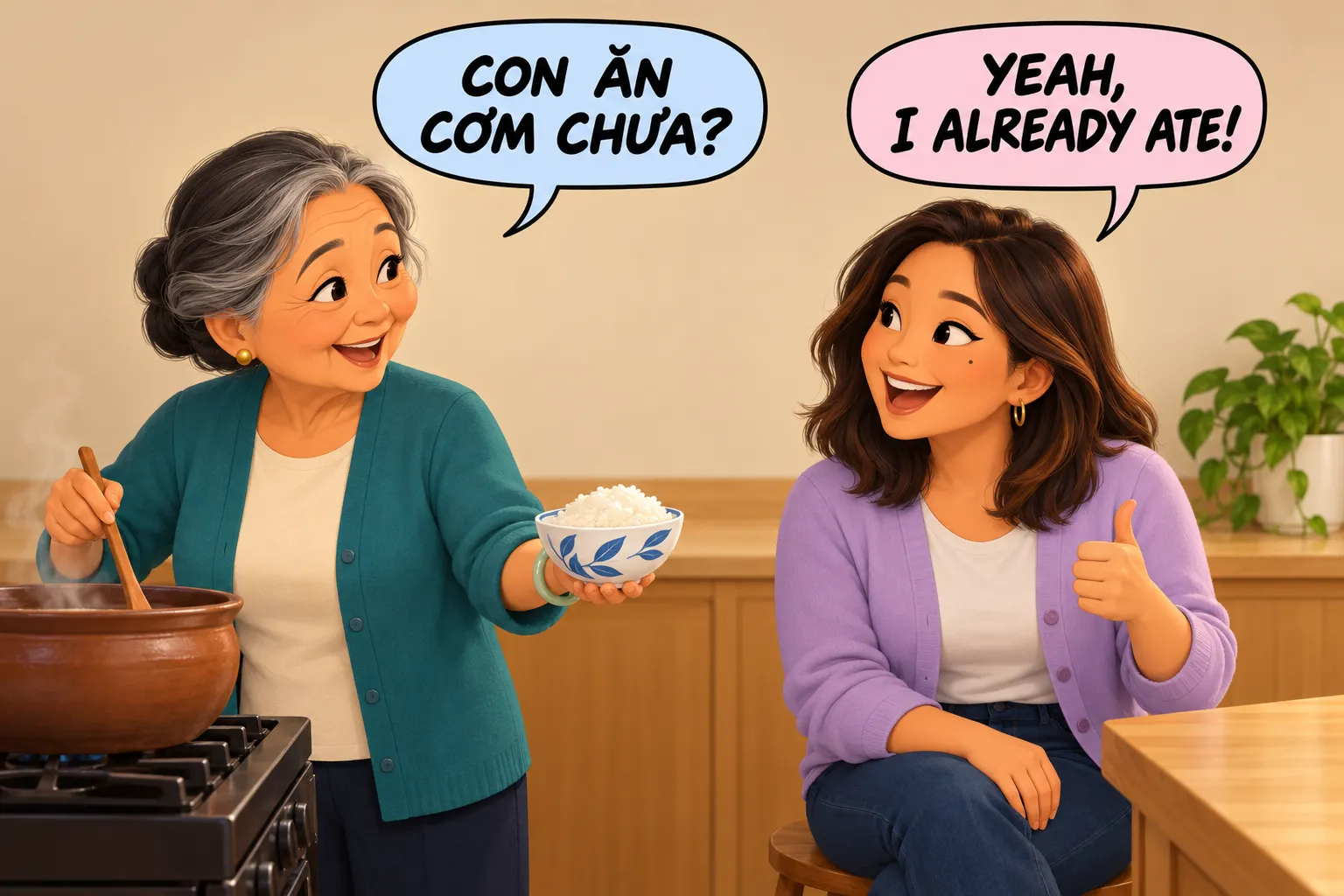
The answer comes out in English.
Usually you reply in English, or you have to stop and search your memory for the few Vietnamese words you know.
 , by Achieve Education, is an online Vietnamese course for people who want to be more fluent in Vietnamese.
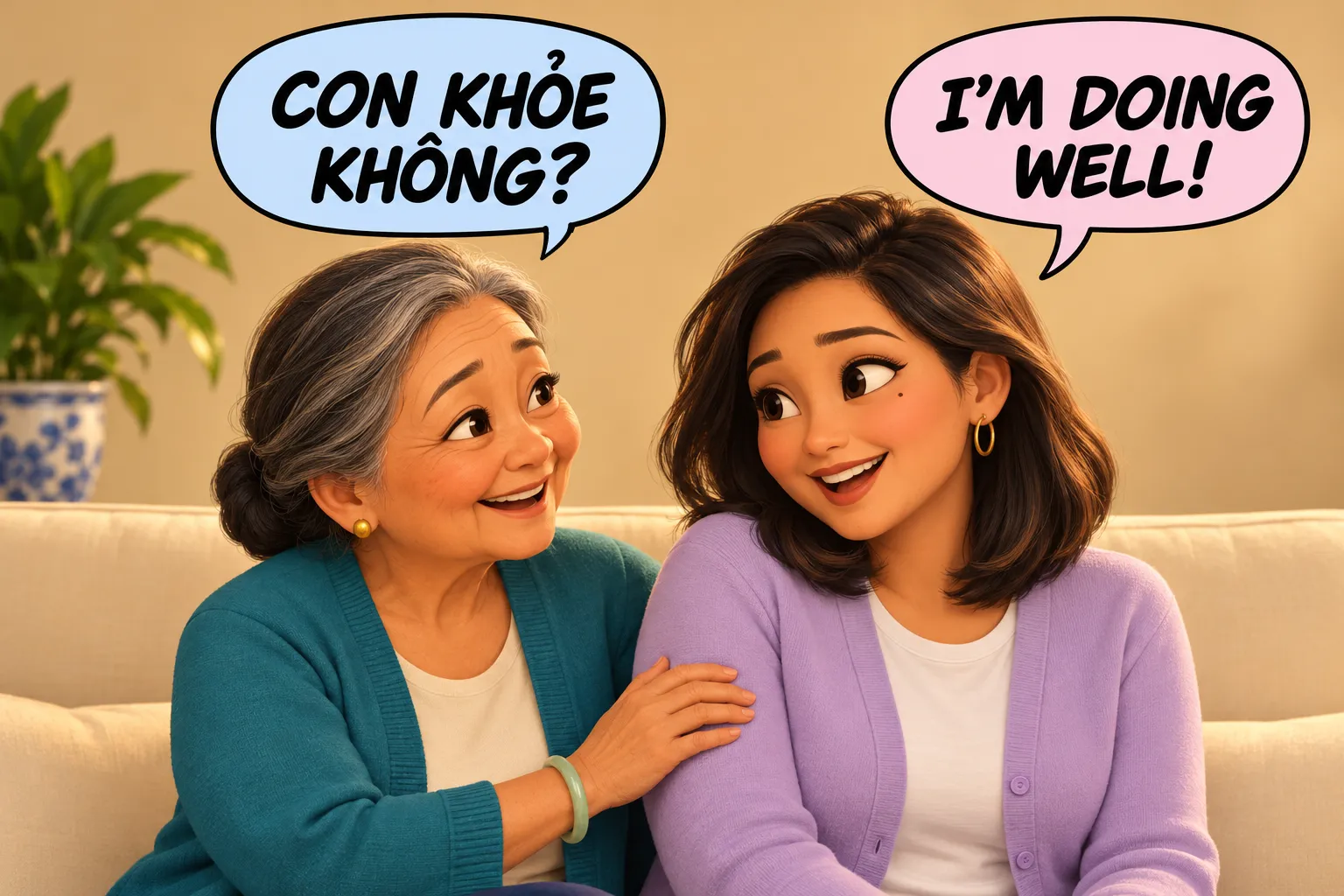
You can follow most of what your grandparents say over dinner, but when it’s your turn to answer, you can’t say it the way you want to in Vietnamese.
Usually you reply in English, or you have to stop and search your memory for the few Vietnamese words you know.

Your shifts are long, and your schedule leaves no room for a formal class that runs on someone else’s clock. You’ve tried Duolingo, a vocabulary app, and a handful of YouTube videos, mostly on your phone after work. You picked up a few words here and there, but none of it got you speaking.

At dinner you’re stuck in the middle, translating with whatever Vietnamese you have and hoping nobody notices the words you skip.
It’s never too late to learn the language your family speaks, and you shouldn’t need a classroom or an open schedule to do it. Anyone who grew up hearing Vietnamese deserves the chance to answer their grandparents in it.

Course Designer
Award-winning teacher and bilingual Vietnamese children’s book author, Kimly helped design the SayViet online course.

Virtual Coach
Cô Vi is the virtual coach inside SayViet. She practices with you between lessons, on your schedule, and models each word so you can hear it, say it aloud, and try again.
you can learn in three easy steps:Learn it. Speak it. Use it. Learning Vietnamese should feel like coming back to a language and culture you love, not like catching up on something you owe.
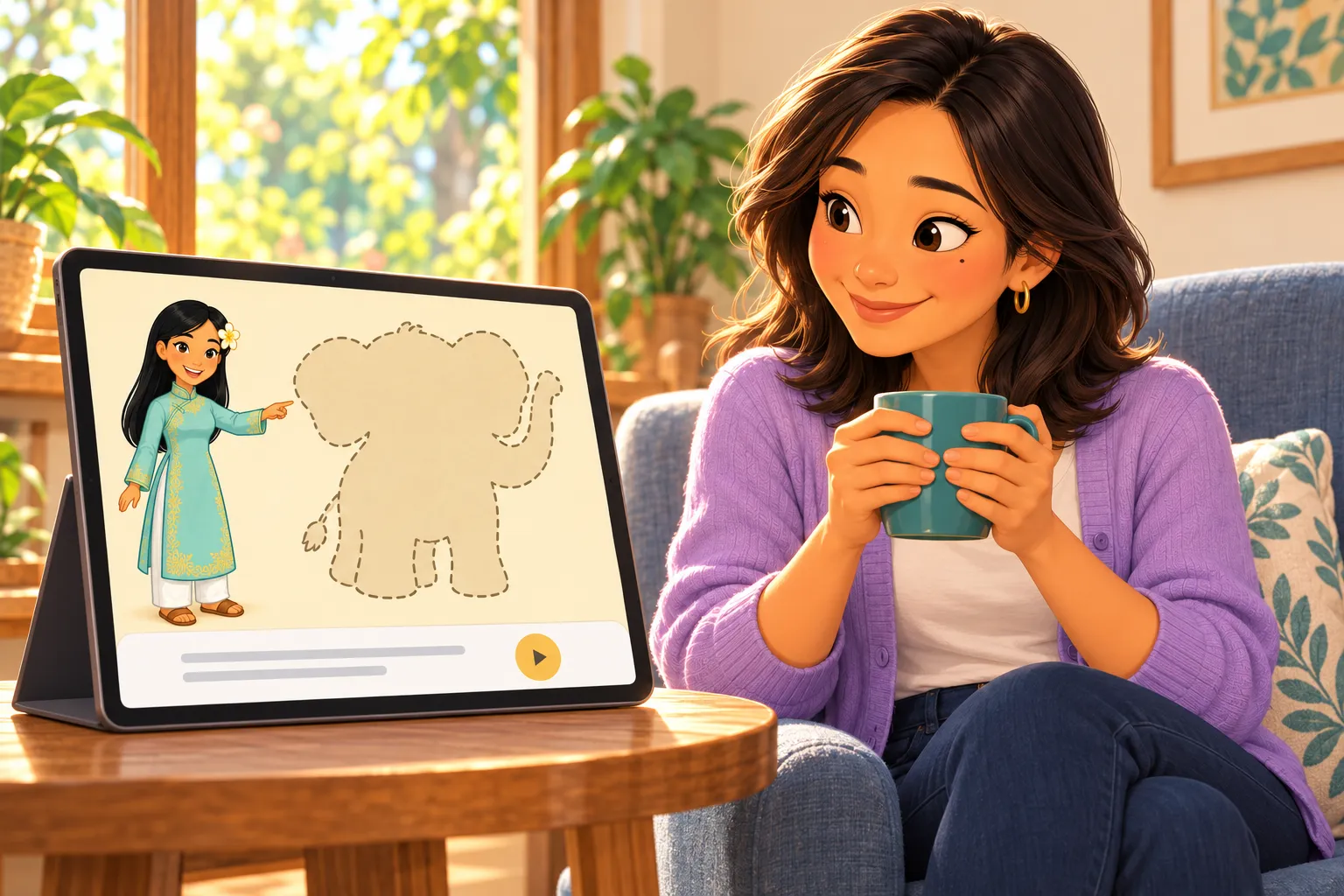
Pick up a lesson whenever you have time: a greeting one day, a story the next. Story Time books come in Beginner, Intermediate and Advanced levels, so you can choose by how much Vietnamese you already know.
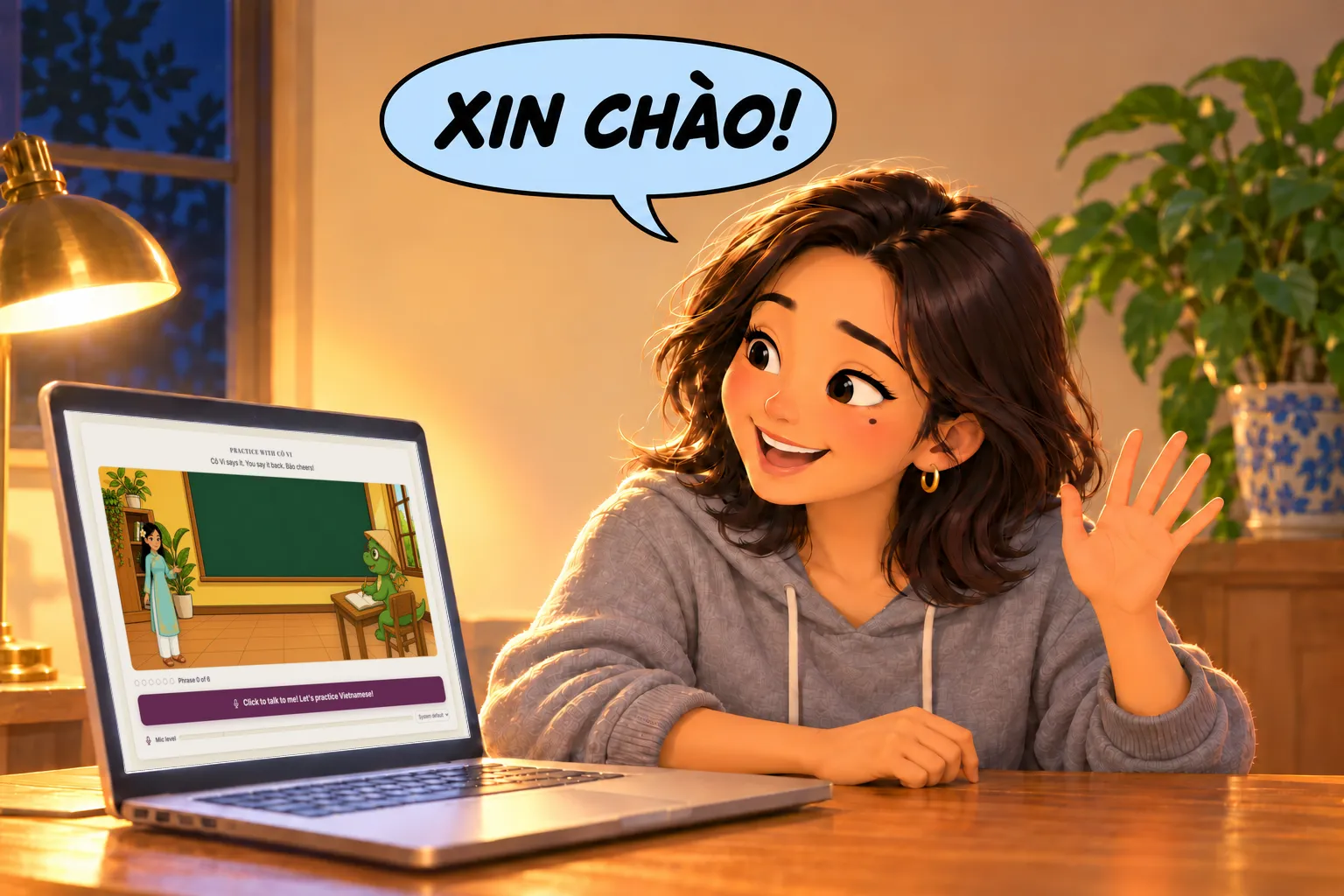
You see the words, hear Cô Vi say them, and practice aloud in the comfort of home. Repeat as often as you like, at your own pace.

Bring the words home: a greeting at the door, an answer to your grandmother’s question, one small moment at a time.
Cô Vi says each phrase, and you say it back. Replay any lesson as often as you like.
When it’s your turn, SayViet captures a short clip of what you say, turns it into text and checks it against the words in the lesson. It checks the words, not your accent. We don’t keep your clips on our servers or in your account. Each clip goes to ElevenLabs, our speech-to-text provider, to turn it into text.
Beginner is mostly English with Vietnamese words tucked in. Intermediate is half and half. Advanced is all Vietnamese. Start where you are and move up when you’re ready.
Foundations covers 29 letters, 12 vowels and 6 tones. Tap a letter to hear it, see a word that uses it, and follow along as Cô Vi reads.
Hunt for treasures in a painted market, explore Bảo’s Cottage, and take a quiz after each Story Time book.
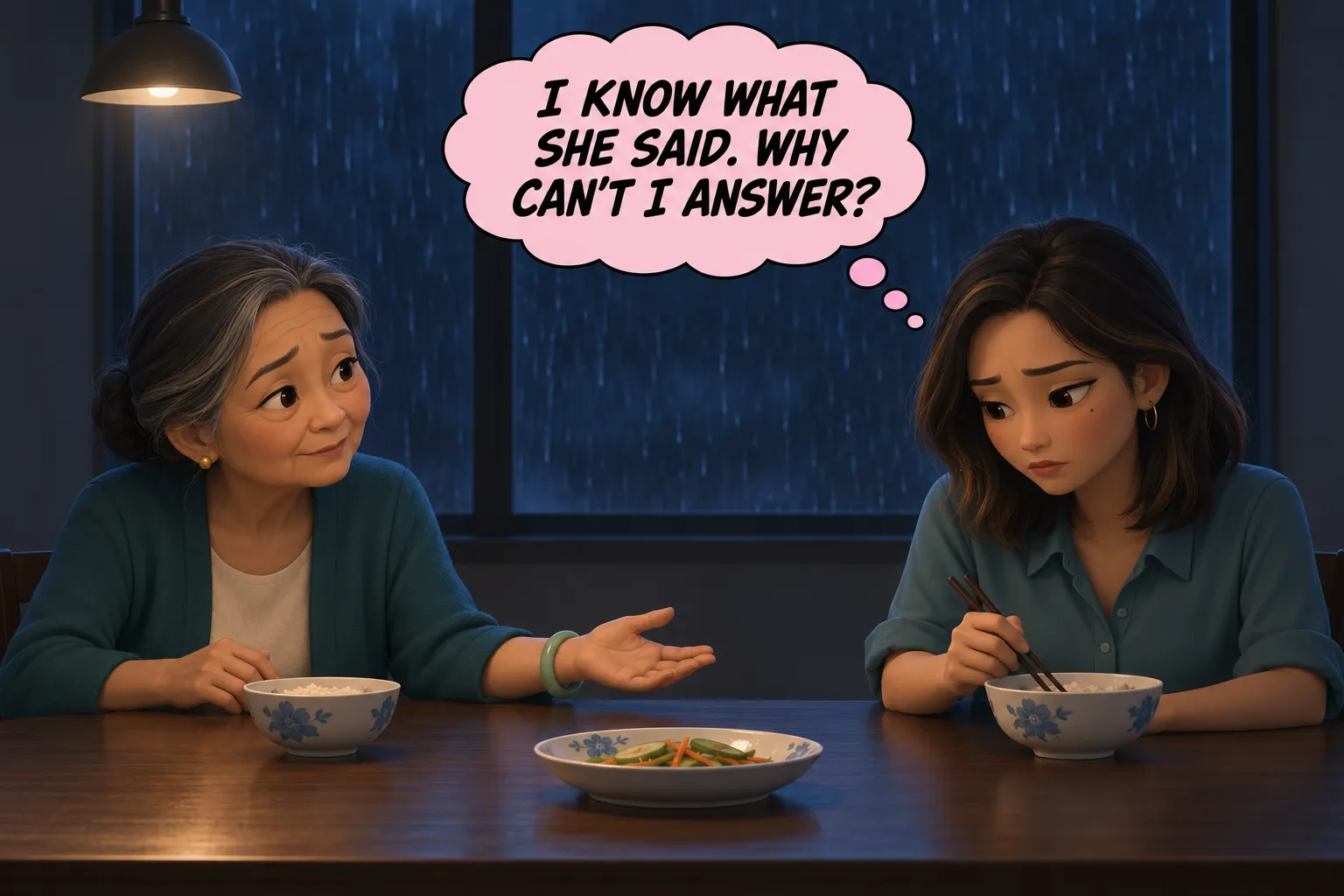
Each dinner you answer in English, the words stay in your head instead of on your tongue, and each year the first Vietnamese sentence gets a little harder to start.
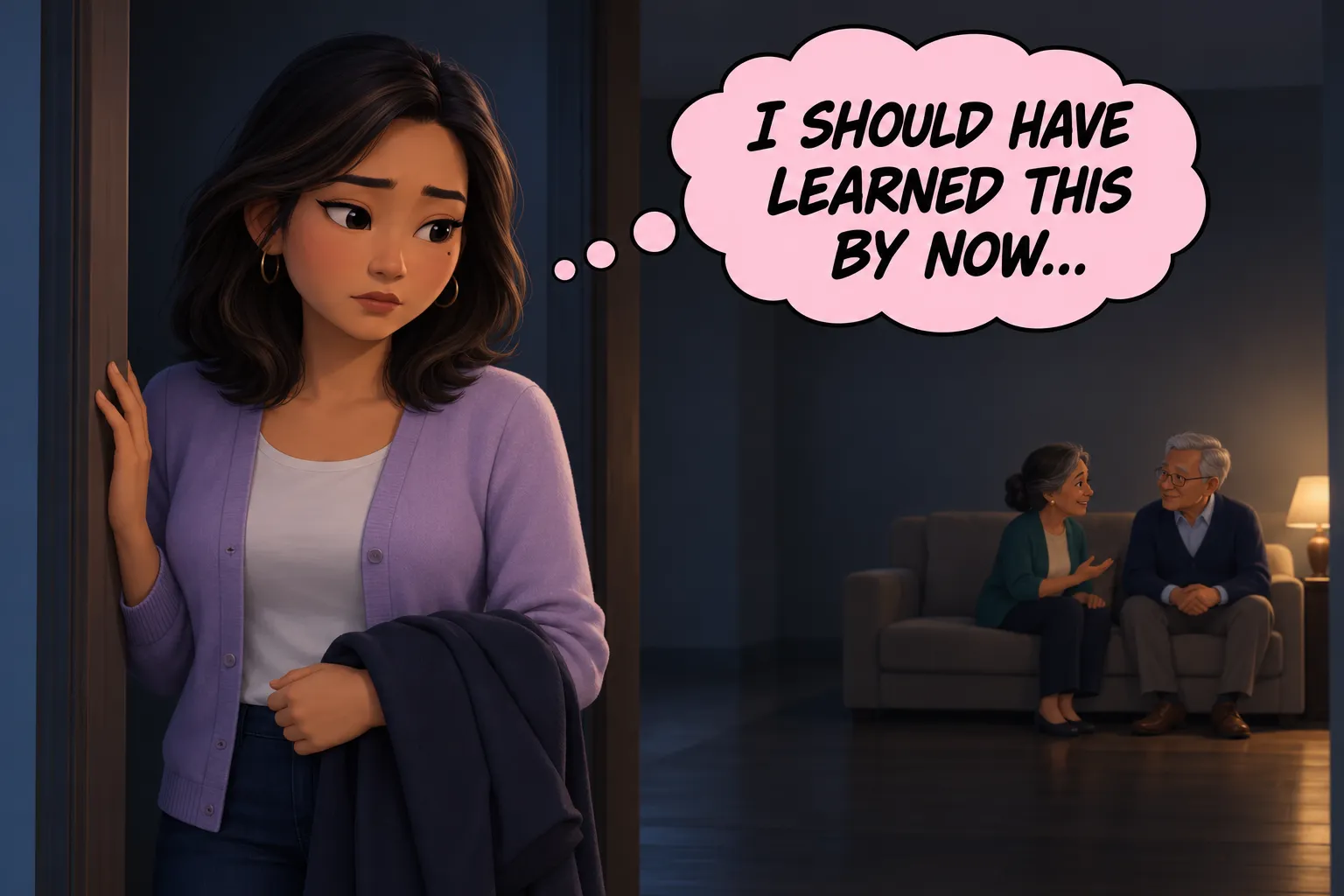
The longer speaking stays out of reach, the more it feels like something you should have done already, and the more being a guest in the conversation starts to feel normal.

Fewer answers lead to fewer conversations, and fewer conversations lead to fewer words. Over time, your grandparents’ stories are heard but not answered in Vietnamese, and the language that connects your family drifts a little further from the next generation.
With , grow from first few words to a real conversation, so you feel at home in your family’s language.

At dinner you’re at home in the conversation, not a guest in it, and their stories finally get answered in their own language.
It feels like coming back to a language you’ve always had.
Choose a planStart with the free first lesson. Understanding and speaking are different skills, and speaking grows with practice out loud. In each speaking lesson, you see the words, hear Cô Vi say them, and practice aloud as often as you like.
Any age. SayViet is organized by level, not by age. It starts from first words, so a grown-up learning for family dinners can begin at the beginning, and the Story Time books come in Beginner, Intermediate and Advanced levels that you choose by how much Vietnamese you already know.
No. There’s no live teacher and no class schedule. Cô Vi is a virtual coach, a character created for SayViet. She models each word so you can hear it, say it aloud, and try again, whenever you have time.
Yes. There’s no schedule to keep. Pick up a lesson after work or on a day off: a greeting one day, a story the next.
Yes. One membership covers your whole family, so you can practice together, and your spouse can start from first words.
SayViet is built around speaking. In each of the 20 speaking lessons, you see the words, hear Cô Vi say them, and practice them aloud, and the Story Time books let you listen, read out loud and take a quiz at three levels. With monthly expanding content, you will have lots of opportunity to learn.
Both memberships give you the full SayViet program, including 20 speaking lessons with Cô Vi; Foundations, with 29 letters, 12 vowels and 6 tones; 20 Story Time books in three levels, Beginner (mostly English), Intermediate (half English, half Vietnamese) and Advanced (all Vietnamese); the audiobook The Pan That Sings; videos, interactive games and Free Play; and printable worksheets.
The full Lesson 1: Greetings, all 12 Vietnamese vowels, and the complete first Story Time book, Lớn! (Big!), with its quiz. It costs nothing: create a free account and complete a $0 checkout. No card, no expiration, and no automatic subscription.
SayViet is an online web app, not a download. You need a device with a web browser and sound, plus a microphone to practice speaking with Cô Vi.
Only how you pay. Monthly is $29 a month. Annual is one $275 payment a year, which is over a free 2 months. You can cancel anytime from your account page. Your plan stays active until the end of the period you’ve already paid for. Questions about billing? Email Support@achieve.education.